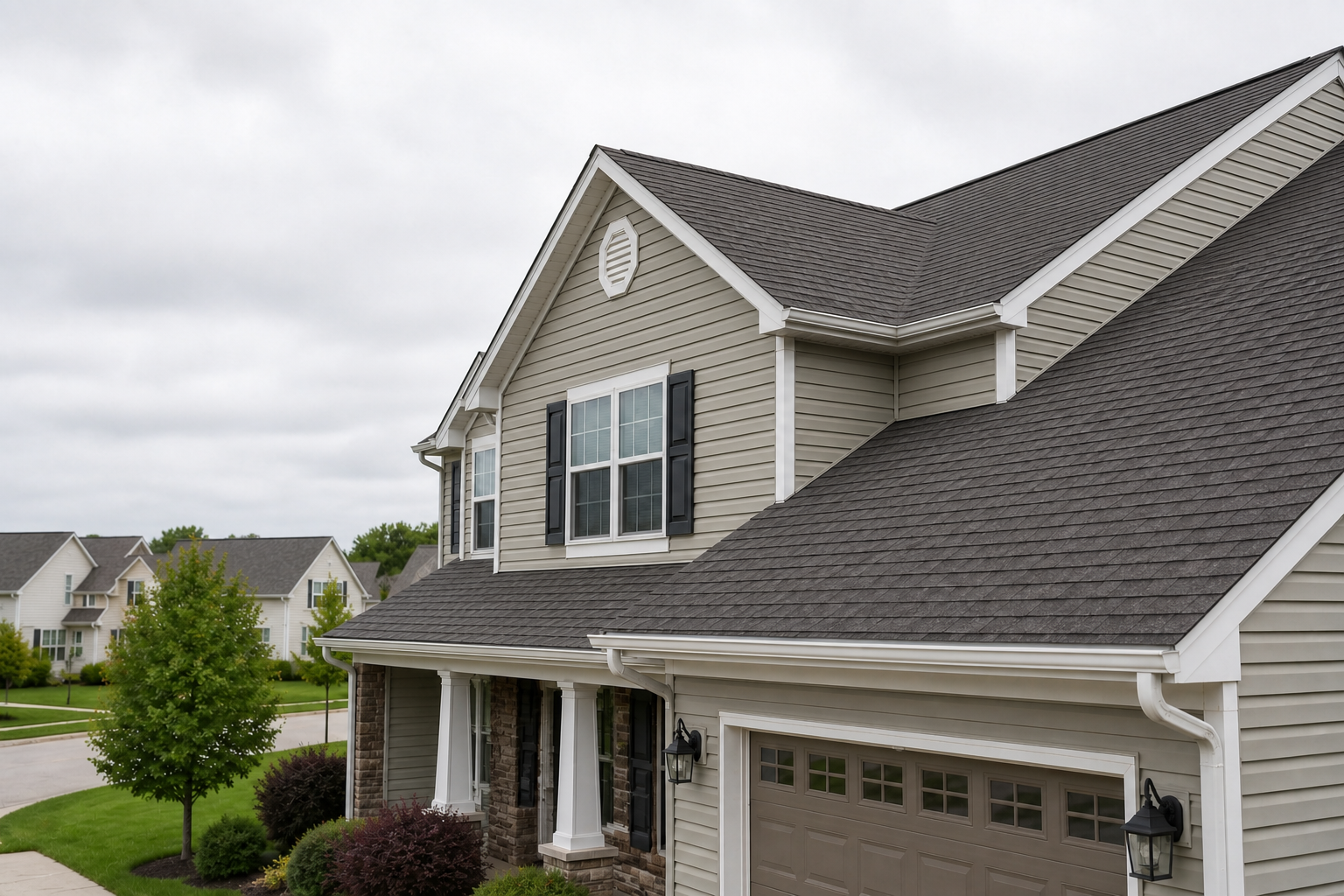
Three-tab versus architectural
A three-tab shingle is a single flat layer with cut-outs, rated 20 to 25 years and about 60 mph wind. An architectural shingle is laminated from two layers, rated 30 to 50 years and 110 to 130 mph with proper nailing. The weight difference is roughly 200 pounds per square versus 250 to 350.
On the Connecticut shoreline that wind rating is not academic. A nor'easter in March can hold 50 mph gusts for hours, and three-tab roofs installed in the 1990s and 2000s are the ones losing tabs. For a house that is being re-roofed today, architectural is the sensible default and costs only modestly more in material.
Nailing and sealing
Manufacturers publish a four-nail standard pattern and a six-nail high-wind pattern. Every roof installed here gets six, placed on the marked nail line, driven flush and not overdriven. Overdriven nails cut the mat and are the most common installer error found on failed roofs.
Shingles seal to the course below with a thermally activated adhesive strip. They need a few warm days after installation to bond. Roofs installed in December are hand-sealed at the rakes and eaves so a January gale does not catch them before the sun does.
Salt air and algae
Within a mile of the Sound, salt accelerates corrosion of ordinary galvanized nails and can leave the shingle intact while the fasteners give way. Stainless or hot-dipped galvanized ring-shank nails are used there.
The dark streaks on north-facing slopes across Milford are blue-green algae feeding on the limestone filler in the shingle. Algae-resistant shingles use copper-coated granules and are worth specifying on any slope shaded by trees. Streaking is cosmetic, not structural, but it affects resale.
Color and the neighborhood
Weathered wood, pewter gray and charcoal cover most of the shingle roofs in town and suit the white and gray clapboard of the older houses. Lighter colors reflect more heat and run a few degrees cooler in the attic in July. Color boards are brought to the house so the choice is made against the actual siding and trim.
Warranty, in plain terms
A limited lifetime shingle warranty covers manufacturing defects on a declining scale after the first 10 years or so. It does not cover installation errors, wind damage beyond the rated speed, or poor ventilation. Extended warranties that cover workmanship are available when the whole system, from ice barrier to ridge cap, comes from one manufacturer. The registration is filed after the job and the confirmation goes to the homeowner.