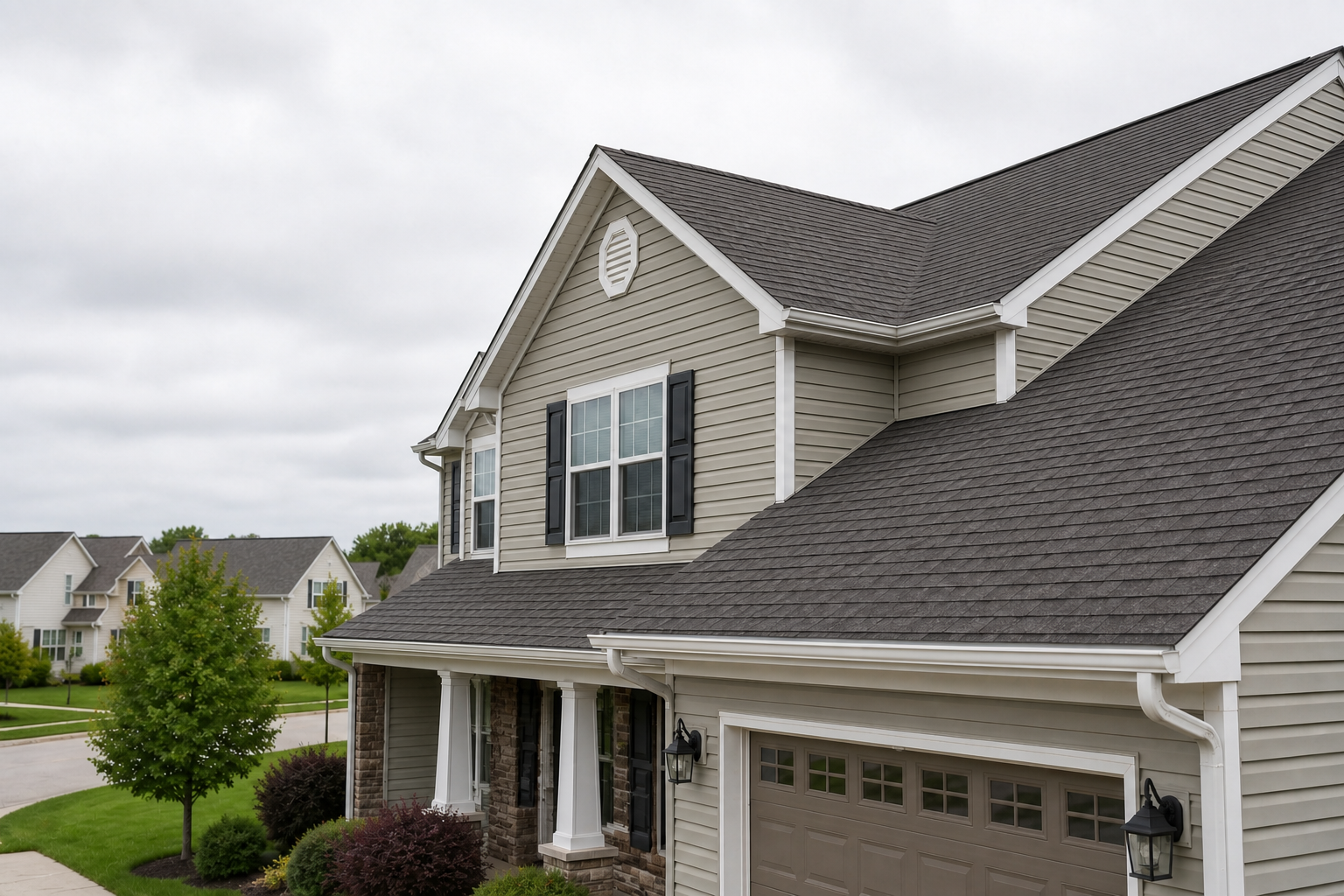
Chimney and sidewall flashing
Brick chimneys on Milford colonials are usually flashed with step flashing along the sides, a cricket or saddle on the uphill face if the chimney is over 30 inches wide, and counter flashing let into the mortar. When the original installer skipped the cricket, snow and leaves pile against the back of the chimney and the water finds the joint.
A flashing repair replaces all of that metal. Reusing old step flashing with new shingle is the shortcut that produces a call-back in the second winter, so it is not done. Where the chimney mortar is soft, the joints are repointed before the counter flashing is set.
Wind-lifted and missing shingles
Coastal wind gets under shingles whose seal strip has failed, which happens when a roof was installed in cold weather and never got a warm week to bond, or when the shingle is simply old. Single missing tabs on a roof under 15 years old are replaced one at a time and hand-sealed.
When more than 10 percent of a slope is lifted or creased, replacing tabs one by one stops being sensible. The slope is stripped and re-shingled instead, which also allows the fastener pattern to be brought up to six nails.
Valleys
Valleys carry the water from two slopes and wear out first. A closed-cut valley on an architectural roof has a life close to the field shingle if it was laid over ice barrier; without barrier it fails 5 to 8 years earlier. Repair means opening the valley about 18 inches either side, adding barrier and metal, and relaying the cut.
Skylights and vents
Older acrylic bubble skylights from the 1980s and 1990s leak at the curb flashing more often than through the glazing. The curb is reflashed with a new kit or the unit is replaced with a modern deck-mount skylight, which is usually the better spend once the roof is being opened anyway.
Box vents, ridge vent end caps and turbine vents rust out and separate from the deck. Each is replaced with a new unit and sealed to the underlayment rather than patched with roof cement, which lasts about two seasons in direct sun.
Eaves after an ice dam
An ice dam pushes water backward under the shingles and into the wall. The visible damage is stained ceilings and peeling paint at the top of an exterior wall. The roof repair involves stripping the bottom courses, replacing any soft deck, installing ice barrier a full 24 inches past the wall line, and relaying the courses. Attic insulation and ventilation are then reviewed, because the dam will form again if the roof deck stays warm.
Gutters are checked at the same visit. A gutter pitched the wrong way or packed with oak leaves from the yard makes every ice dam worse.